The Blue Angels as Reality 

Today, while sitting on a boat with my brother and his family, I saw the Blue Angels in action, and what made it so impressive was the speed and the sound. It's one thing to watch them on a screen; it is another thing entirely to see them in real life. It seemed like magic. And the fact that they were flying over water and not over an airport or airbase made them all the more magical. They were disconnected from any aviation infrastructure. No runways. No hangars. No control tower. Just sleek machines painted dark blue and gold, flying over the Severn River.

Reality is always orders of magnitude greater than when it is recorded on a screen. Night and day different. One is reality, the other is...not. And that higher magnitude is vastly more impressive. I thought of the pilots and how they were a part of this reality. What they were doing seemed magical. They were like demi-gods. Elite beyond measure. 

New Track: Twenty Times Around 

Twenty Times Around is now live on the site. Find it on the Music page.

The track began as a meditation on elapsed time, looking back twenty years and feeling both the distance and the speed with which it passed. The first movement is slow, ambient, and sober, built from synths and arpeggiated phrases that carry the gravity of memory and reflection. From that stillness, a second movement materializes quickly as bass shifts from synth to bass guitar, drums enter, and the piece gathers momentum. What begins as nostalgia resolves into something firmer, a sense of decision and forward motion, prompting a close musician friend to describe the piece as cinematic, like a moment in a film when reflection gives way to action. I agree.

Blackwoods  

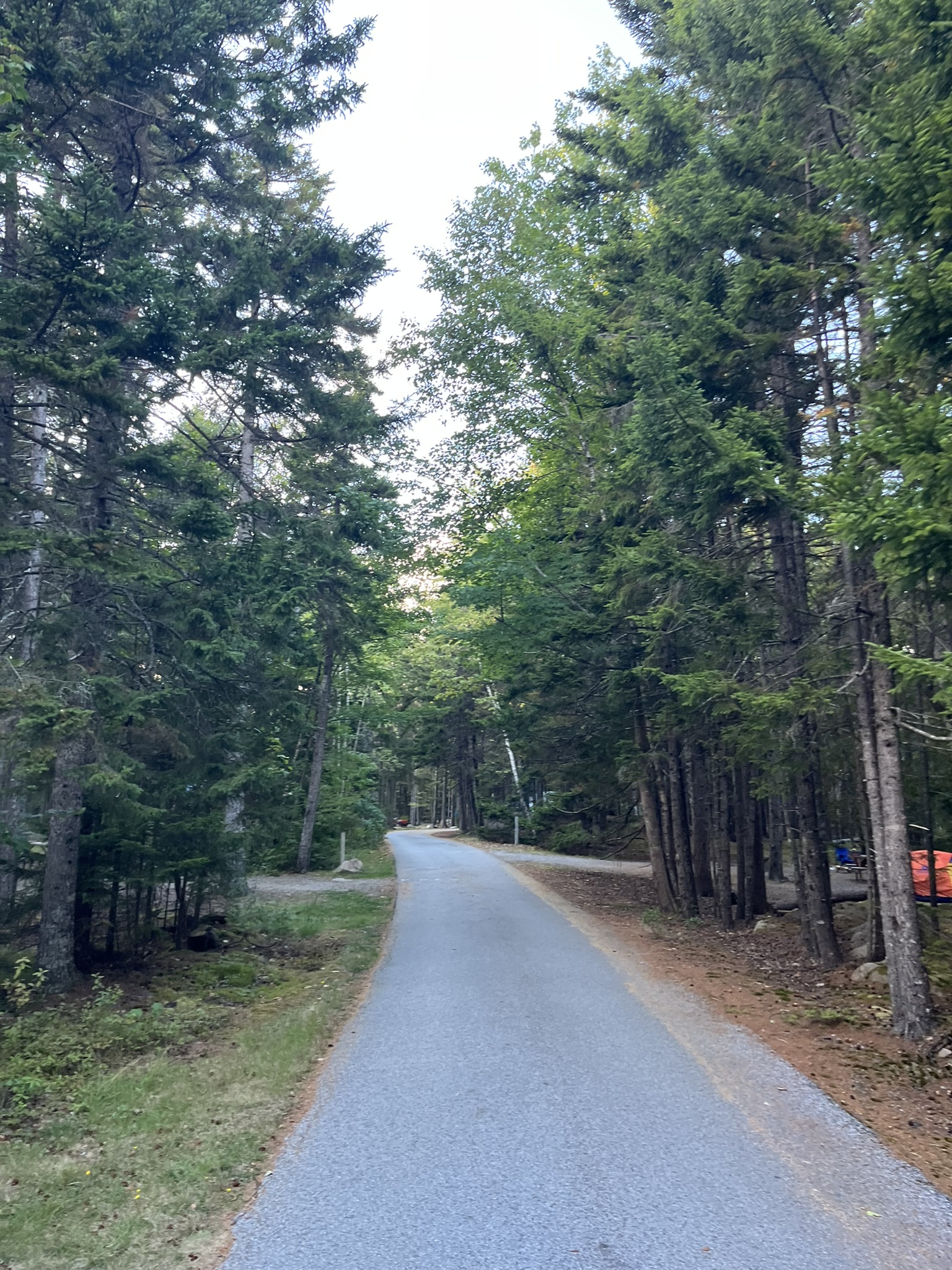
When we visit Acadia National Park, we stay at Blackwoods—one of the Park’s two managed campgrounds. Located near Otter Point on the southeast end of Mount Desert Island, Blackwoods is Acadia for us, a place we have returned to again and again, nestled in the heart of the Park. Its proximity to the shore gives a constant sense of the coast, making for a magical and distinct camping experience. When the surf is active, you can hear it from your campsite. At night, the ringing buoy bell and the wind through the sparse trees surround you as you lie in your sleeping bag…provided a family member isn’t snoring too loudly. The atmosphere at Blackwoods is beguiling and restorative.
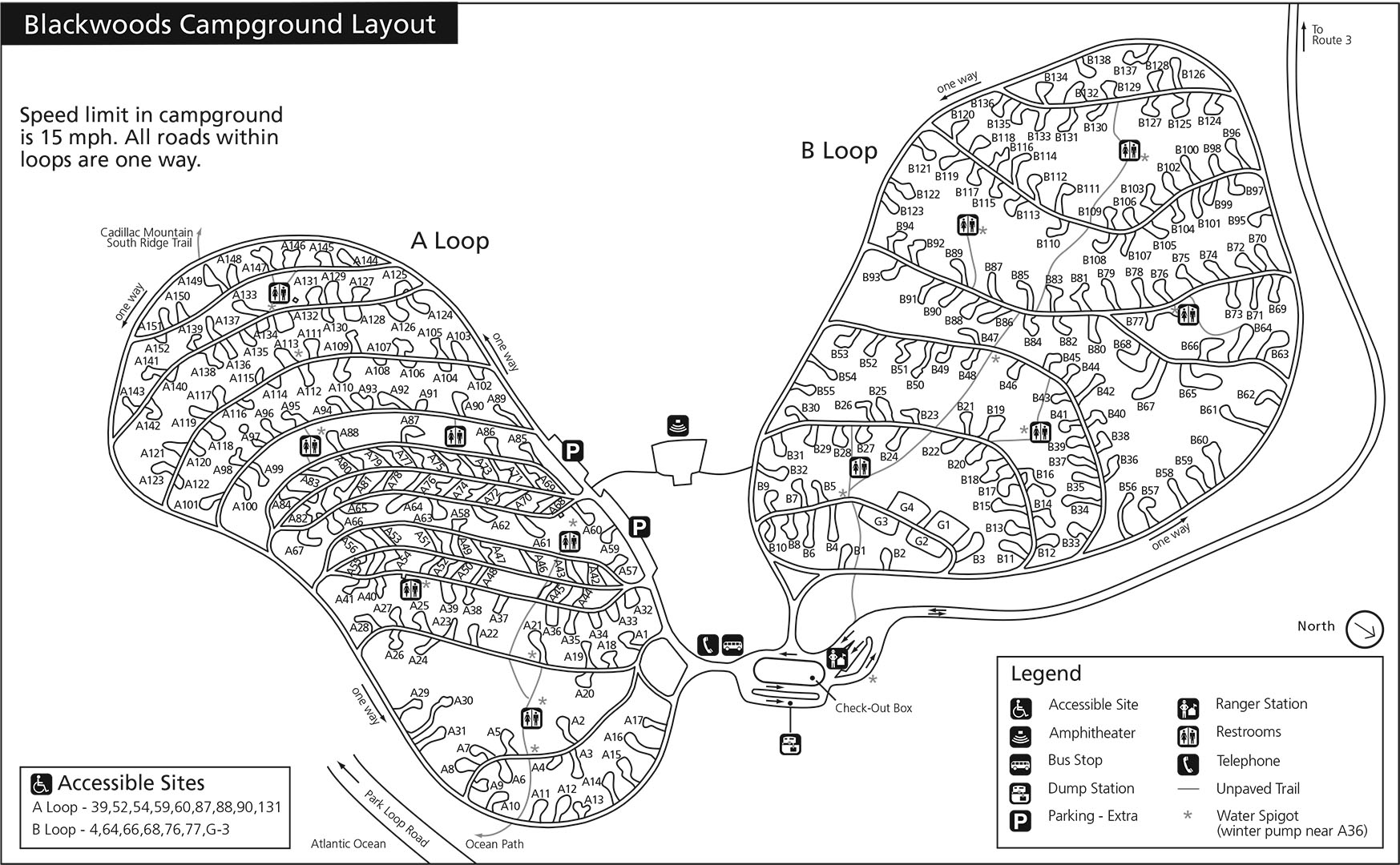
Blackwoods is organized into two sections: Loops A and B. We, being creatures of tradition and ritual, always stay in Loop A, if we can help it. On reflection, I believe it is because Loop A is that much closer to the shore. The shore was good. The shore meant atmosphere. During our most recent visit this September, my brother and I walked Loop B and were dually impressed by how surprisingly different it was in look and feel to Loop A. We had ridden our bikes through Loop B many years ago, and so were familiar with it, but now we noticed its character as if for the first time. Loop B had more dense tree cover, which made it darker, but in a good, mystical way. We resolved to go for Loop B next time. 
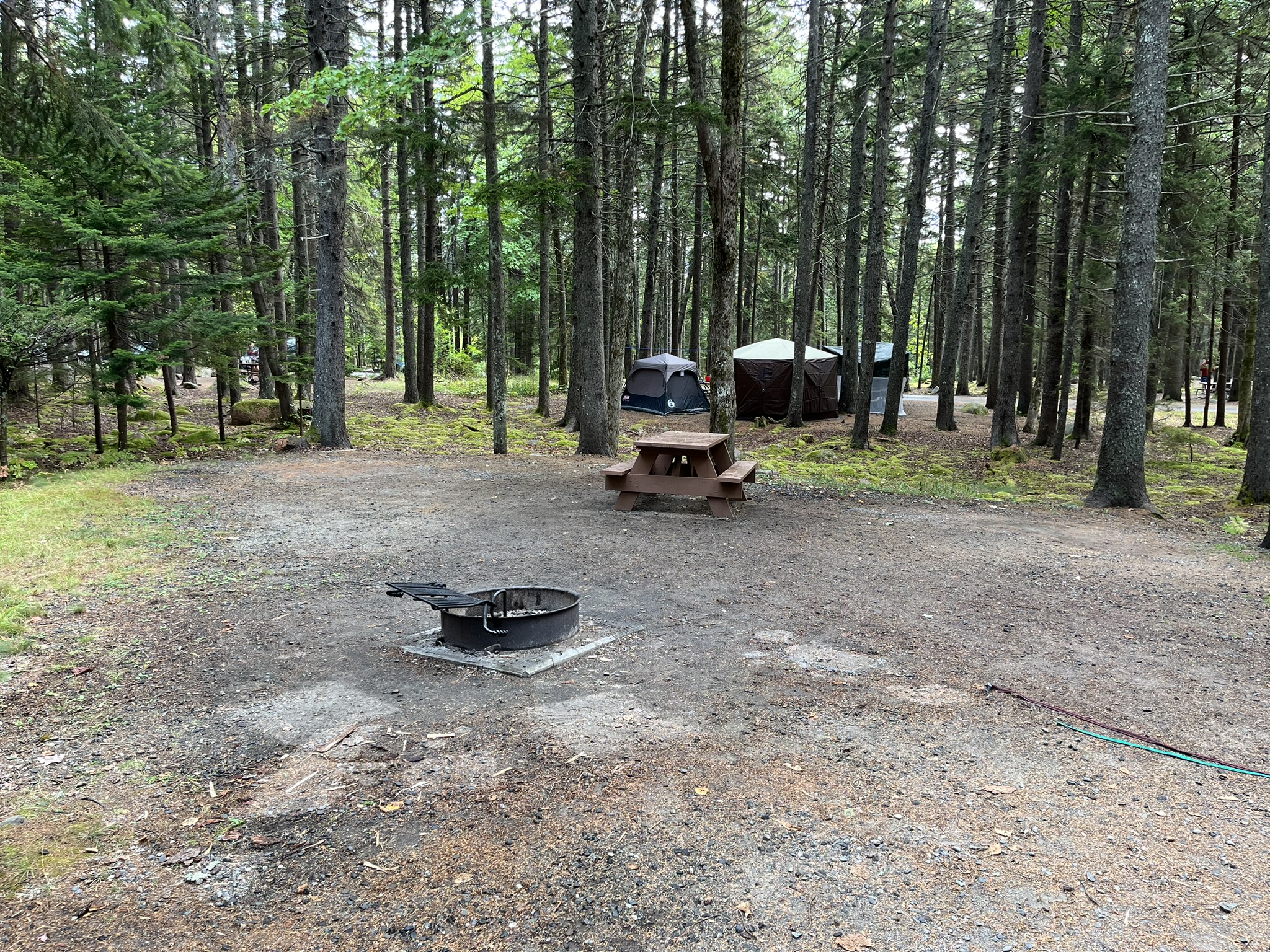
There is a quiet to Blackwoods when campers head out in the morning. It is incredibly relaxing and peaceful - a perfect foil to the draining routine of normal life. Suddenly trees are worth looking at. The calls of birds you don’t hear back home work their way into your awareness. The crunch of gravel on the campsite is noticeable under your feet. You are back to existing, not chasing or doing. This is the effect of Blackwoods. 
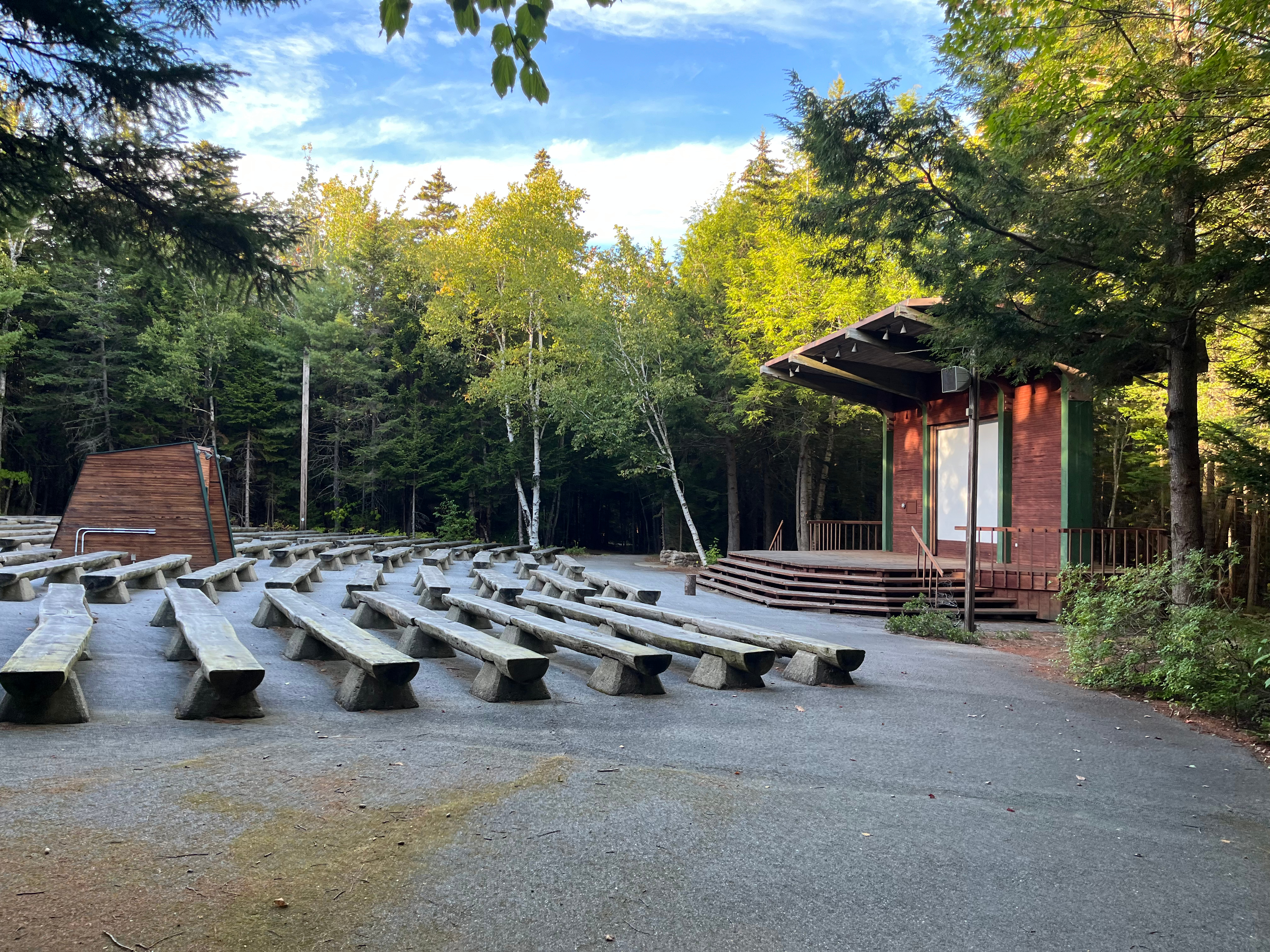
One prominent feature of Blackwoods is its amphitheater. Located between loops A and B, it connects the two. The amphitheater is where the National Park Service rangers gave slideshow presentations on the park’s many attractions and features. We attended the shows nightly during our stays in the Eighties and Nineties. By 1997, we had stopped attending them, mostly due to having seen them so many times. There are only so many times you can hear about tidal pool ecosystems and constellations in the night sky. My family got the feeling that the shows are no longer conducted, but we could be mistaken. There was something peaceful, reassuring, and informative about those slideshow presentations. They gave us something to do between dinnertime and s’mores time. During the day, the amphitheater was a place for kids to ride their bikes to and walk on stage and see what was behind it. We soon discovered you could meet other kids there. In the mid-Eighties, I met a cute girl with short blond hair named Jessica. I believe she was from New York. Open and sweet, she wore my red windbreaker and when she handed it back to me, the smell was lovely. The fact that I remember her name says something. It was a short-lived crush rooted at the amphitheater. 

From the time of our first visit in 1983 to 1993, we camped in a Coleman brand pop-up camper. It sure beat camping in tents. The interior table folded down to form a third bed, which our large family of seven needed. I am still amazed how we all fit in there. Around 1997, my father traded in the Coleman camper for a larger and fresher Jayco pop-up camper. Newer and more spacious, it was a significant and welcome upgrade. 
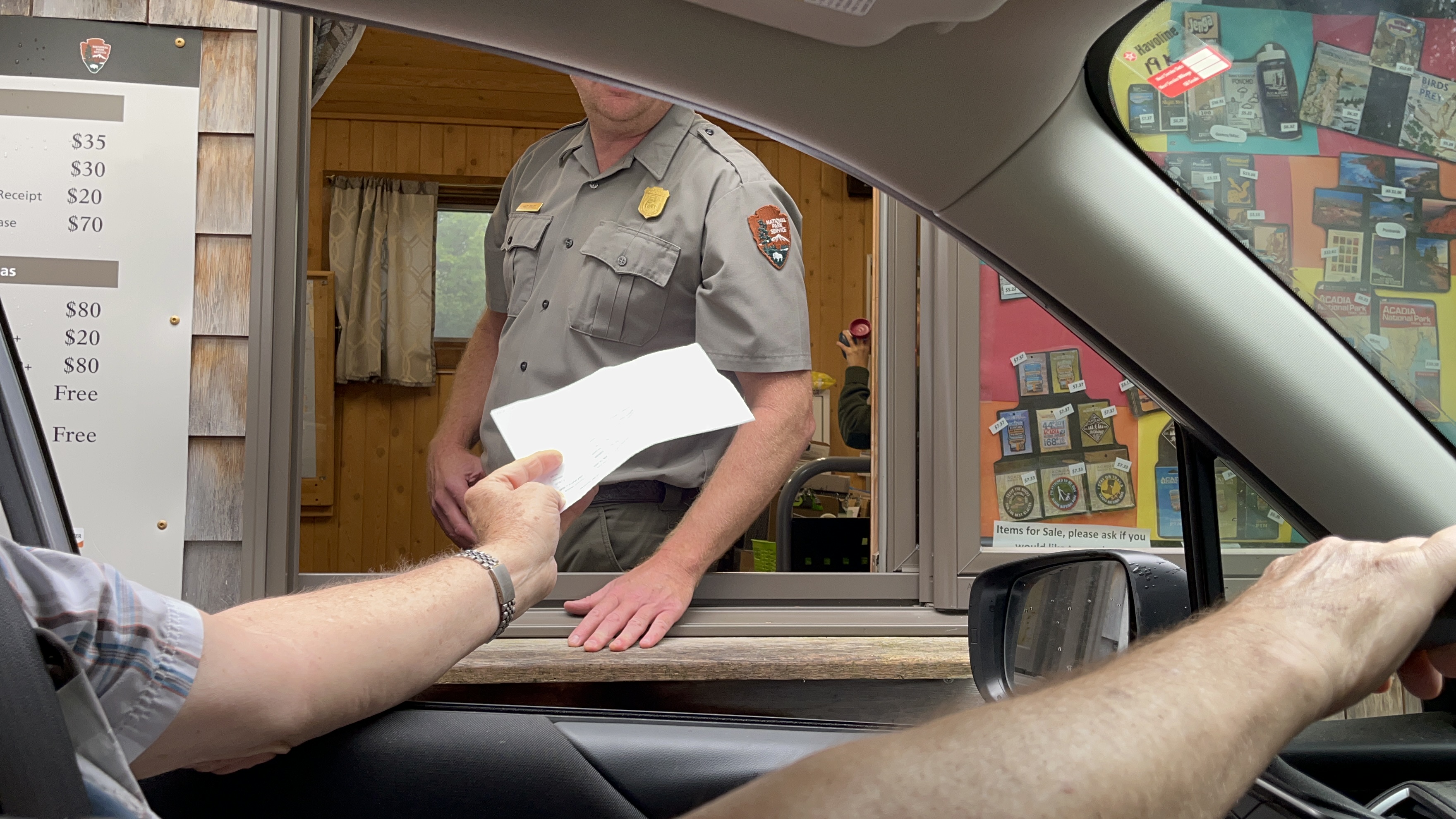
There was a ritual that we followed when arriving at Blackwoods. First, we checked in with the ranger station at the campground entrance. This required turning the engine off and we would all sit there in deafening silence after having ridden six hours on mostly highway. My father and the ranger would greet each other and chat amiably. I would always review the grease board with its notes on the week’s forecast and slideshow topics. The ranger would point out our site on the map and draw a path to it with marker. We would then drive slowly but excitedly up to our site, eye its features and judge its fitness among other sites, then my father would back into the site trying to get the camper located as best he could and then he would shut off the engine. After six plus hours, we had arrived.
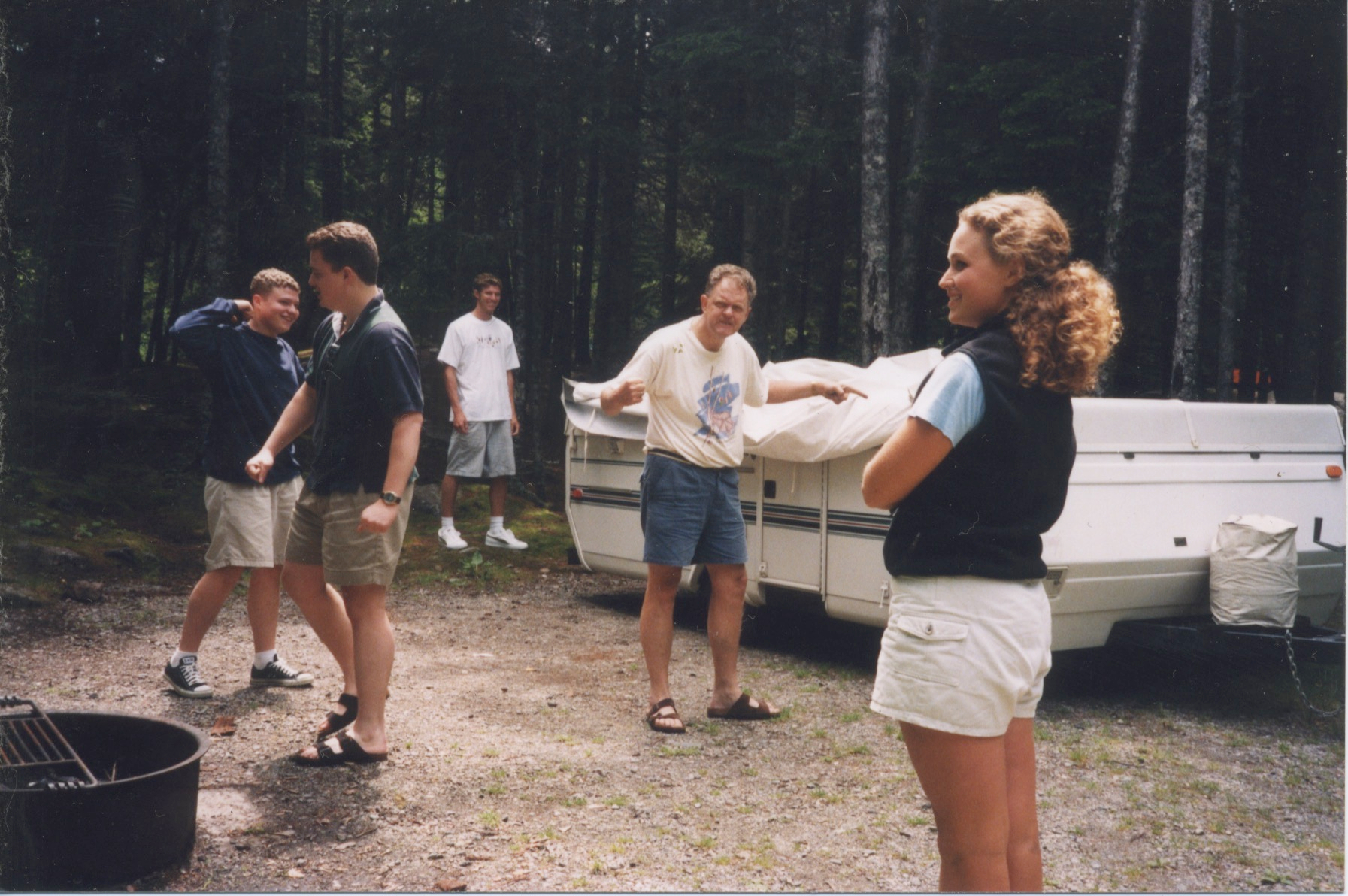
My siblings and I would all get out and proceed to manhandle the camper - under our father’s supervision - into its final location and orientation. Once that was done, we would go about getting the camper stabilized and popped-up. My father would then unpack the rest of our camping gear and set it up in the usual locations around the camper and site.

One of the best smells to wake up to in the world was that of bacon frying in the skillet. Eating it with eggs and coffee was a delight and set the tone for the rest of the day. Morning cigars and reading followed. Mid-day was spent exploring the park and/or going into Bar Harbor or Northeast Harbor. Evenings featured dinner prepared on a propane stove inside the camper or on the site’s picnic table. Nighttime activities included more cigar smoking (and in later years, whiskey drinking), playing frantic card games like Dutch Blitz, and talking while sat around the fire. There was also reading by the hissing Coleman lanterns, which, until the cannister design appeared, required hand pumping to keep the gas pressurized and flowing to the mantles. This silence, except for the lantern hissing, was the sound of camping at Blackwoods.

We camped at Blackwoods almost every year from 1986 to 1993, then, after my older sister got married and my younger siblings headed off to college - and I spent the summer of 1996 in Italy - our annual trips to Acadia were placed on hold. Then my father got the Jayco camper, I moved back into my parents’ house, and in the summer of 1997, we returned. Our relationship with Acadia - and Blackwoods - was renewed. Whereas Blackwoods was my bubble to isolate myself in, now it was a basecamp from which to venture out and experience Acadia through hiking and biking. It was now just my parents, my younger brother David, and I myself. Debbie now camped with her own growing family. John and Rebecca were away at college. My father, David, and I smoked multiple Moniemaker cigars in the morning and evening. They were machine made but somehow so tasty. It was probably the fact that we were camping.

I finally went back to college full-time in 1999 and camping at Acadia became something that marked the summers in between the school years. Whereas camping had been an escape from a full tech support job, it was now just one more wonderful occasion during college life. This was the apex time when my parents were middle-aged, I was still “young”, and my siblings were still frequent campers as well. I remember lying in the camper’s bed reflecting on how staying with my parents in Blackwoods would soon be a thing of the past. (or so I thought).

During the 2000s, visits to Blackwoods and Acadia were infrequent - only three visits - but as immersive as ever. 2008 marked the first time I stayed in Blackwoods in a site of my own with my girlfriend at the time. It was still Blackwoods, just in a space of my own, establishing my own setup and feel.

In 2010, that same girlfriend and I stayed in Seawall, the national park’s other official campground on the western half of the island. It was wonderful, with its own magic, but remarkable in how different the Acadia experience could be when not at Blackwoods. I got married the next year and we did not visit Acadia for six years, finally returning in 2016 and briefly staying at Blackwoods for just one night before cold overnight temps sparked my wife’s desire to get a room in Bar Harbor. That would be the last moment my ex-wife and I would have in Blackwoods.

In 2021, with COVID still in the picture and driving up national park visitorship, my family and I stayed in Bar Harbor Campground, several miles north of Bar Harbor and far from Blackwoods. It was a solid campground, but lacked the history, location, official park status, and mythic magic of Blackwoods. It was a distant experience to Blackwoods and left me feeling forlorn not being able to stay at an official park campground. Still, we were visiting Acadia and that was the important thing.
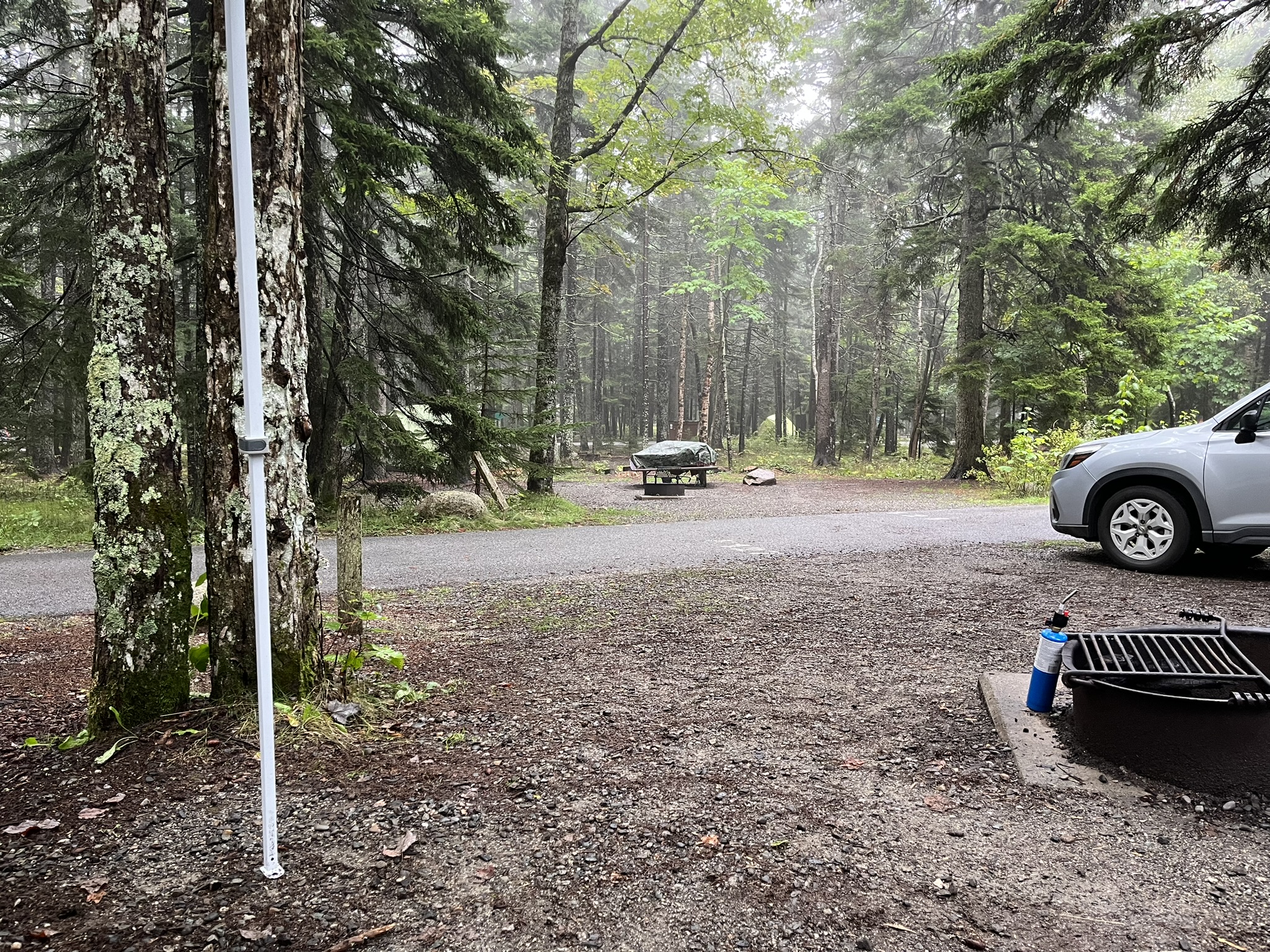
We finally returned to Blackwoods in 2023 after a seven year hiatus - the longest of all time. My father, brother, and I stayed in Loop A. No popup camper, just tents like in 2021. One day into our stay, we were informed that an approaching hurricane was forcing a park shutdown the following day. That made the visit a bittersweet one.

We returned in earnest this past September, staying in Loop A for three days and four nights. A full Blackwoods experience was had once again after such a long period of flux. The classic features were all there - bacon and home-roasted coffee in the morning, cigars in the morning and evening, sounds of distant campers, the bathroom door banging, crows waking us from our slumber in the early morning hours, and the breeze gently blowing through the surrounding trees.

Mythic Acadia 

Acadia National Park - Acadia to me and my family - is one of the most sacred places in our collective mythology. Since 1983, we have been re-invigorated, soul-nourished, and inspired by its rocky glacial mountains, pine and birch forests, rugged coastline, and quintessential Maine harbor towns. Our many visits to Acadia over the decades have made it a part of family culture and a place experienced throughout multiple phases of life - childhood, adolescence, early adulthood, parenthood.  

For me, the word Acadia evokes powerful mental images: rest and reflection at the campsite, sunny group hikes on the many “mountains” of Mount Desert Island, the stimulation of Bar Harbor’s shops, and glimpses from the car window at coastal vistas between the rush of passing lines of pine trees. Acadia delivers a feast for the senses - the fog-shrouded coastal vistas, the smell of salt air, echoes of camper voices across the campground, buttery pastries, hissing gas lanterns at night, and the steady rhythmic crashing of surf upon the rocky shore.

The impact of Acadia on the soul is profound and absolute. It is one of those few places where magic is in the air and permeates everything down to the smallest pebble and you feel the privilege to be there.


All photos © Jeff Kiess

Atomic Cafe 

On Cabot Street in Beverly, Massachusetts, there is a bespoke coffee establishment called Atomic Cafe. For decades, I have esteemed it to be an archetype of cafes. The place occupies a mythic place in my memory as a key fixture of my North Shore Chapter and an expression of the ideal public spot for coffee, ambiance, and immersion.

I first experienced Atomic Cafe in the fall semester of my freshman year at Gordon College. I went there with some friends one night and discovered a classic hole in the wall where baristas serve espresso coffee drinks, soup, pressed sandwiches, and assorted pastries. It was my first encounter with such a place. Atomic, as we called it, had its own quirky and endearing DNA. Brushed metal tables and chair, some positioned against the large bay window overlooking the sidewalk, and, further in, booths clad in red sparkle vinyl with Formica tabletops. Lastly there was a bar with four stools at which to read and sip on a macchiato or cappuccino.

Atomic Cafe became one of those spots that called me when I wanted to get out and immerse myself in relaxed urbanity, energy, and a sense of connection. While a student at Gordon, I went there a handful of times, but my friends and I tended to go to Barnes and Noble much more often. It was later, after I graduated from Gordon in 2003 and settled on the North Shore, specifically in Ipswich, that Atomic Cafe really grew in importance and value to me. 

Ipswich was just under a half hour drive from Beverly. The sleepy historic town had its own cafe called Zumi's, but it just didn't have the scene and busy ambiance that Atomic Cafe possessed. Atomic's location in vibrant downtown Beverly, on the other hand, was perfect. Being an introvert, Atomic gave me an ambient sense of community as a place where I could get out and be among people without necessarily interacting with them. I could spend several hours people watching, reading books, even sketching - all while being exposed to an endless parade of indie music that was the Atomic Soundtrack. It was at Atomic that I discovered the Flaming Lips in 2005 when their hit album Yoshimi Battles the Pink Robots was putting the band on the map. I wore that album out over the next year. I have Atomic to thank for that discovery.

When I went to Atomic, I would typically get a mocha latte or a chai mocha latte. These were served in large squat mugs on saucers with the nice touch of a dark chocolate bar rested across the rim. If I was hungry and it was in the middle of the day, I would order my favorite hot sandwich - a pressed number they called a turkey cordon bleu. Ham, turkey, Swiss cheese, mustard on rye bread. You couldn't go wrong.

It was at Atomic that I ran into my friend and fellow musician Erin and discovered he had also settled in Ipswich - a few streets over from me. He and I met up a number of times at Atomic Cafe. Our friendship wasn't the kind where we would hang out frequently but when we did hang out, it was always a meaningful time. I first met Erin at Gordon when I was in the chapel band with me playing bass and him playing electric guitar. We headed off and then drifted apart during the last year or two of my time at Gordon until that afternoon when we got reacquainted at Atomic. It was also at the Cafe that he informed me he had joined the post-rock band Caspian and would be touring overseas.

Later in 2006 when I landed my first IT job at the Cummings Center in Beverly, I spent the lunch break on my first day at Atomic, which was just a five minute drive away. That was a stand-out moment on a crisp autumn October day. I got a coffee, sat outside at one of the sidewalk tables, lit up a cigarillo, and thanked my lucky stars for landing such a “one-in-a-million” job. My self-designed North Shore life was coming together beautifully.

Much later in 2016 after living on the South Shore for five years, I visited Beverly while working as a full-time rideshare driver and discovered that Atomic Cafe had moved across the street, rebuilt and reconceived from scratch. Gone were the red sparkle vinyl booths and bar stools. Gone was the quirky hole-in-the-hole vibe. The new Atomic Cafe was all hardwood floors, exposed brick walls, with a three-sided serving bar in the center of the space. It was more expansive, more urban chic - an updated purpose-designed incarnation. It was beautiful - an absolute gem of a cafe, but no matter how great it was, it was not the Atomic Cafe of my memories from the 2000s. When I think of Atomic Cafe, it will always be that version.


Crossing Into the Eighties 

When the Seventies turned to the Eighties, I was living at what my family calls the House on the Hill in Jenks, a suburb of Tulsa, Oklahoma. At that location, hints at what the 80s would bring had already begun to manifest. Atari was appearing in neighbors’ homes, Reagan was knocking on the White House, Tom Brokaw was delivering the news, and The Empire Strikes Back was about to hit the theaters. The biggest takeaway to me was that elements of the 80s were already showing up in the last year of the 70s. 

1979. The last year of the Seventies. The grime was beginning to be washed off by sleeker style: tight synthesizer music, fashion shifts, and the rise of the personal computer. Hair was still feathered. CHiPs, Fantasy Island, Charlie’s Angels, Love Boat - all still going strong. Nike sneakers were starting to show up in force. To a child like me, the big change was the calendar year. 

I felt a fascination with the fact that the third digit of the year was no longer going to be a 7 but instead, now an 8.

That was a marker. Life was changing in one small way but also a larger way. That 8 was big. That 8 was ushering in newness. It was now “the Eighties”. A new decade and, with it, a radically different world.

I like to think that the 80s manifested instantaneously and with fanfare, as if we knew how different (and amazing) the decade would be, but it was a hazy gradation from the old decade to the new. To me, the transition was a blur, at least in my memory. My recollection is more of oh yeah, that memory was from 1980. The eruption of Mt. St. Helen’s was the biggest news story as well as the Iran hostage crisis. For me, the 80s were largely experienced in Wyomissing, Pennsylvania and North Dartmouth, Massachusetts, but their mystic roots were in Jenks, Oklahoma. There was no midnight moment that ushered in the 80’s. And, for a child, how could it have been any different?

Distilling Ipswich's Atmosphere 

This is a painting that I created in 2006 depicting County Street in Ipswich, Massachusetts. It is an interpretation of a photo I took while on one of my many walks around Ipswich’s eastern neighborhood. I painted this image as an exercise of distillation, to strip away the little details to get to the atmosphere of the scene. So, this is not just a painting, not just an image. Rather, it is a window into place, and feeling.

The original photo:

Seeing this scene during a walk in June 2005 - the layout of the street, the houses, the trees, the colors of the houses, it all just looked right for a photo. It looked quaint and looked representative of Ipswich in one straight line of street. There was a blue sky, there was direct overhead sunlight. The moment was correct.

In painting this scene, I wanted to emphasize the colors and the shapes, the direction of lighting, the areas of light and dark, the balance of structure and trees and flowers. I removed as many details as possible so that only the essence of the image remained. I removed the power lines, telephone poles, the signs, the trash bins, and even details of window structure. I wanted to emphasize form and color as depicted by light in that moment. I wanted to capture the time of year, the fact that there were flowers in bloom, that the trees had leaves. This was early summertime, not stark winter.

County Street is a microcosm of Ipswich. The many historic homes sprinkled throughout Ipswich are represented here on County Street and like elsewhere, they are painted in tones of the Ipswich palette. There is a density to Ipswich's neighborhoods and town center and that density, that compactness, lends a sense of immersion where families, homeowners, and renters are within close distance of each other, yielding a concentration of community. It makes for a magical sense of space and atmosphere.